Introduction
One of Scotland’s greatest natural treasures is its extensive areas of land with minimal light pollution, where we can still observe truly dark skies. Importantly, such areas can be accessed with some ease. Scottish dark skies have their well-known and expansive counterpart above what is now Canada. It is therefore natural for the University of Aberdeen and the University of Calgary — alongside other partners — to come together in the exploration of this phenomenon.The workshop will explore this theme from a multidisciplinary perspective. In the context of the humanities, we will ask how the experience of being exposed to skies unpolluted by artificial light shaped the development of human culture, religion, and science in antiquity. Modern sciences will bring other pertinent questions, such as what the term ‘dark sky’ actually means in terms of physics, or how light pollution affects fauna, flora, and humans. Further, legal and ethical aspects of light pollution will be discussed in the context of policymaking. In exploring these questions, we will gain insights also from observational practices grounded in community knowledge.
This exploratory workshop will take place on the campus of the University of Aberdeen in Old Aberdeen but with hybrid delivery of lectures and presentations, welcoming participants and speakers in person and online alike. The event is open to professional academics, students at all levels, pupils of secondary schools, members of local non-govermental organisations, and other members of the public. It is envisaged as the first in a series of events dedicated to dark skies, in the past and today.
Co-operation Partners
Keynote Speakers
British Academy Visiting Fellow at the University College London
with the project "Cosmology, Astronomy, and Theology in the Dead Sea Scrolls" (2026)
Director of the Rothney Astrophysical Observatory
& Member of the Committee for the Protection of Astronomy and the Space Environment (COMPASSE),
the American Astronomical Society
Programme
See below or Download a PDF file.All in-room activities will be streamed online.
You are welcome to register for the whole event or just for selected sessions.
Last update: 27 June 2026.
I. Introduction to Dark Skies
Sunday, 28 June
Show / hide details
Venue: see the registration email
All times: Mountain Time / British Summer Time / Gulf Standard Time.
8:15/15:15/18:15
8:25/15:25/18:25
8:30/15:30/18:30
history of science
Mapping Time and Space – The First Ancient Astronomers
The first ancient astronomers did not just describe the movement of stars; they had to invent a whole new language to do so. This lecture explores how ancient Near Eastern cultures, especially Egypt and Babylon, created tools to map the sky, build time units, and use mathematics to explain what they saw. Instead of a simple shift from myth to science, we will see how these cultures combined both approaches to develop their knowledge. Moving to the Greco-Roman world, the lecture will show how Greek thinkers introduced new questions, blending philosophical debate with astronomical observation and looking at the universe from an outside perspective rather than from Earth. We will examine why the heliocentric theory—which already existed in antiquity—was rejected at the time. Finally, we will discuss how the Hellenistic period bridged the gap between Babylonian empirical data and Greek logical models, culminating in Ptolemy’s Almagest and his complex system of epicycles and eccentric circles that became the standard astronomical theory for over a millennium.
9:30/16:30/19:30
islamic traditions
Dark Skies as a Night Clock – Prayer Times in Palestine before Electrification
It is well known that Muslims are meant to pray five times a day. Today you will see many Muslims using smartphone applications that display prayer times to know when to pray. Also in mosques it is now common to see sets of electronic clocks indicating the time of each prayer in a given day. But how did Muslims know when to pray before the advent of such devices? Great achievements of pre-modern Islamic astronomy in such centres of learning like Baghdad notwithstanding, local communities had developed practical and yet precise ways of determining the time of prayer. In this context, in my talk you will hear about Palestine before the introduction of electricity during the British Mandate and in the early years of electrification – as remembered by the generation of my grand-grand-parents and grand-parents. As much as the sun guided them in day prayers, it was dark skies that served as their clock for dawn and night prayers.
10:15/17:15/20:15
10:45/17:45/20:45
astronomy
Did you Know the Stars are Disappearing?
– What the world is losing as a result of the overuse of light at night
The Rothney Astrophysical Observatory (RAO) has a very busy community engagement team and one day I was invited to spend some time with youngsters in Grade 4 who were at the RAO learning about sky science. I happened to be on hand that day and the RAO team thought the school group would benefit from a spontaneous discussion about light pollution. My opening line was, ‘Did you know the stars were disappearing?’. Their hands shot up with offers as to the reason why – black holes had to be the culprit! Their young minds were as far away from what I was trying to get them to think about as could be. My initial reaction was amusement but that quickly subsided. In my extensive travels down the road of light pollution education I have discovered that it is not just grade 4’ers that are oblivious to its perils, it is the vast majority of everybody. The loss of natural darkness at night is a sudden global phenomenon with many downsides. In this presentation I will share some ideas and perspectives that I hope will spark your curiosity and interest.
11:45/18:45/21:45
indigenous science
Reconnecting with the Sky Ancestors
12:30/19:30/22:30
Dark Skies in the Past and Today
II. Delving into Dark Skies
Monday, 29 June
Show / hide details
Venue: Sir Duncan Rice Library, Seminar Room 224
All times: Mountain Time / British Summer Time / Gulf Standard Time.
4:00/11:00/14:00
biology
The Need for Darkness – The effects of light pollution on nature
Nature has evolved over millions of years to respond to predictable, dependable patterns of darkness. Yet, in a relatively short time, artificial light at night (ALAN) has come to dominate areas that humans share with nature. Light pollution affects about 23% of the world's land area (and is still increasing ~2.2% annually) and not just in urban centres. The loss of darkness has been shown to have a profound, disruptive effect on species that have been studied so far. We briefly summarise some of the work that has been done on animals (insects, birds, mammals, amphibians and reptiles) and plants (crops, trees). But there are still many knowledge gaps in what is becoming an important research area in biology.
astronomy
Dark Skies Then and Now: The Impact of Light Pollution on Meteor Observations
This talk introduces the UAE Meteor Monitoring Network (UAEMMN) and explores the impact of light pollution on its monitoring stations. Although each station experiences different levels of pollution, the network has recorded over 40,000 meteors in the UAE sky since beginning operations in 2018.
Followed by an introduction to the Arab-German Young Academy of Sciences and Humanities (AGYA) by Dr Phillip Grimberg, AGYA Member (in person).
5:10/12:10/15:10
5:30/12:30/15:30
jewish studies
The Moon in late antique Jewish Imagery
In the first part of this paper, I discuss physical representations of the moon in late antique synagogue mosaics and paintings, and raise the problem of ‘impossible moons’ in pictorial art. In the second part, I discuss how the moon was imagined in late antique rabbinic literature, and whether naïve statements about the moon reflected limited astronomical knowledge or rather a creative use of astronomical phenomena for literary, edifying purposes.
scottish history
Observations by Moonlight: The Midnight Excursions of William MacGillivray
It was the opinion of the Encyclopaedia Brittanica’s ninth edition that William MacGillivray (1796-1852) was ‘the greatest and most original ornithological genius save one (who did not live long enough to make his powers widely known) that this island [Great Britain] has produced.’ In 1819, he walked the entire distance between Aberdeen and London and made detailed observations of the flora and fauna along the way. While this was an exceptionally arduous journey, MacGillivray’s methods of collecting scientific specimens often involved long excursions regardless of the weather that were chronicled in various journals. This paper will examine his travels by night, often out of necessity, and the ways in which ‘the cloudless sky, spangled with stars’ both aided and hindered his scientific observations in the first half of the nineteenth century.
6:30/13:30/16:30
7:30/14:30/17:30
ancient jewish literature
Night, Dawn, and Deliverance – Darkness Imagery in the David Traditions of the Books of Samuel and the Psalms
Many Ancient Near Eastern and Greco-Roman traditions portray night/darkness and dawn/light as opposing cosmic realities associated with competing divine beings or forces of chaos and order. By contrast, the Hebrew Bible presents both night and day as creations of the God of Israel, who exercises sovereign authority over both realms. Although biblical literature preserves many traditional associations of darkness with danger and uncertainty and of dawn with restoration and deliverance, it reinterprets these motifs within a fundamentally monotheistic framework. This paper examines how the David traditions preserved in the books of Samuel provide the interpretive framework for understanding the imagery of night and dawn in the Psalms. Focusing on Psalm 3 as a test case and its superscriptional connection to David's flight from Absalom (2 Samuel 15–19), the study argues that the night functions not merely as a period of danger but as the divinely appointed setting of God's preservation, guidance, and deliverance, while the dawn serves as the visible realization of his justice and vindication of David, his anointed king. Rather than representing competing cosmic realms, night and dawn become successive stages in God's sovereign work of preserving and vindicating his chosen king.
cultural history
Between Heaven and Earth – The Aesthetics of the Night Sky in Chinese Art
This paper explores the role of the night sky in Chinese art from the Northern Song dynasty (960-1127) to the present. It argues that Chinese artists rarely treated the heavens as an astronomical spectacle. Instead, they created aesthetic experiences of night through emptiness, atmosphere, moonlight, and spatial ambiguity. Drawing on Chinese cosmology, Daoist philosophy, landscape painting, poetry, and contemporary art, the paper examines how the heavens were often evoked rather than directly depicted. Through a number of case studies, it demonstrates that the night sky functioned as a space of contemplation, memory, and cosmic reflection. The paper proposes that the history of the night sky in Chinese art is ultimately a history of perception and humanity’s relationship to the cosmos.
8:30/15:30/18:30
9:00/16:00/19:00
law
Towards Justiciability of the Right to Dark Skies
9:30/16:30/19:30
astronomy
Dark Sky Protection in Practice – Implementing Standards for Observational Environments and Advancing Regional Chapter Development
The presentation will discuss practical approaches to dark sky protection through accepted standards, light pollution mitigation efforts, and institutional implementation frameworks. It will also touch on what is needed to support the growth of dark sky initiatives and stronger collaborative efforts in awareness, policy support, and the long-term sustainable preservation of such environments. Particular focus will be placed on translating dark sky principles into practical operational and community-level applications within the regional context.
10:00/17:00/20:00
10:30/17:30/20:30
astronomy
Getting Around Light Pollution? Can we use modern technology to reclaim the stars?
Astronomers are scientists that attempt to answer the most basic questions one can ask about the cosmos. And like all scientists, those questions are tackled by making delicate measurements. But what do they measure, you ask? Fundamentally, astronomers measure very carefully some aspect of the light that comes from those wonderful and very distant objects they are trying to study. The difficulty is that the tools used to scoop up that distant light also scoops light from every other nearby source including human-made. In this talk I will discuss some of these details and describe what astronomers can and cannot do about the background light that makes delicate measurements difficult. For those with a casual interest, I will touch on some tools that are available for astrophotographers.
discussion
Multidisciplinary Approaches to Dark Skies
III. Engaging with Dark Skies
Tuesday, 30 June
Show / hide details
Main venue: Sir Duncan Rice Library, 7th Floor, Craig Suite
All times: Mountain Time / British Summer Time / Gulf Standard Time.
We are joined by students from Harlaw Academy (Aberdeen), in the company of their teachers, Adrian McKinney and Ross McKenzie.
2:00/9:00/12:00
history of science
Where is the Sun at night? Heavenly Abode of Luminaries in Ancient Near Eastern Literature
This paper will explore ancient Jewish conceptions of the whereabouts of celestial luminaries—the sun, moon, and stars—when they are not visible. Drawing on sources from the Hebrew Bible, Second Temple literature, and comparative ancient Near Eastern traditions, we will examine the widespread notion that these luminaries reside in heavenly abodes when hidden from human sight. While ancient Near Eastern cultures often imagined the sun traversing the underworld at night, the Hebrew Bible consistently situates the sun and stars in the heavens even when they are not visible. This view is further developed in Second Temple literature, especially the Qumran scrolls and the Book of Enoch, where the luminaries are depicted not only as heavenly beings but often as angelic entities performing divine functions. I will argue that these mythological perceptions persisted and intensified in apocalyptic writings of the Second Temple period, despite biblical efforts to downplay celestial worship.
art history
Kaleidoscopic Horizons – Painting the Aurora Borealis
3:00/10:00/13:00
practical astronomy
Gazing at the Sun over the Sea and Earth
Telescope Observations from the top floor of the Library,
This is an opportunity to do some daytime observing by using some telescopes set up by members of the Society. Observing will take place inside through closed windows. The targets will be the Cromwell Tower, which hosts the former telescope dome, and wind turbines in the North Sea. A solar telescope wil be available to view the Sun. Society members will be available to answer astronomy questions.
4:00/11:00/14:00
4:30/11:30/14:30
ancient history
A glimmer of darkness and traverse into the light
My paper will focus on how light and darkness reflect the dawning of democracy in the "Oresteia", a trilogy of tragedies ("Agamemnon", "The Libation Bearers", and "The Eumenides") by Aeschylus, a Greek tragedian from the 5th century BCE. Furthermore, this paper will reflect upon the genderised expressions of darkness and light within the unfolding of the tragedy.
5:00/12:00/15:00
presentations
Ancient Religion and Dark Skies
Untitled
Medical Science & The Importance of Stars in Human Wellbeing
scottish history
Old Aberdeen Walk:
'Oriented' Buildings, Hidden Observatories, and an ancient Sundial
7:00/14:00/17:00
8:00/15:00/18:00
medicine
Out of Sync – How Modern Life Disrupts Your Body Clock
Life on Earth evolved under a predictable cycle of light and dark. Every cell in our bodies contains a molecular clock, and when that clock falls out of step with the environment, there are consequences. The modern 24-hour society, with its shift work, artificial lighting, and social jetlag, drives precisely this kind of misalignment. This talk explores how chronic circadian disruption is linked to increased risk of metabolic disease, particularly type 2 diabetes, and how it affects skeletal muscle, the tissue most responsible for regulating blood glucose. Drawing on recent research, the case will be made that desynchrony from natural light-dark cycles is an underappreciated driver of cardiometabolic ill health.
presentations
Mysteries of the Sky: Poetic Laments to a Time Before Light Pollution
Reflections of Lost Stars
9:15/16:15/19:15
9:45/16:45/19:45
civic engagement
Dark Skies over North East Scotland
We will now change the venue to the Lecture Theatre in the Regent Building.
academic engagement
Ancient Skies Through Modern Eyes – Sharjah Space and Astronomy Hub (SSAH) as a Platform for Research, Education, and Public Engagement
The night sky has long occupied a special place in the lives of people across the Arabian Peninsula, serving as a source of guidance, reflection, storytelling, and observation. In the Arab and Islamic tradition, looking at the heavens has also been closely associated with contemplation and the pursuit of knowledge. This presentation explores how these enduring connections to the sky continue today through the work of the Sharjah Space and Astronomy Hub (SSAH). Drawing on examples from astronomy outreach, planetarium programmes, observatories, and academic activities, the talk reflects on how SSAH brings together research, education, and public programmes while encouraging new generations to rediscover the night sky.
practical astronomy
Navigating Dark Skies in Space & Time – Introduction to Digital Simulations
Can a planetarium give us a real dark skies experience? We will try to imagine the Milky Way and constellations under dark sky conditions. We can use the computer program Stellarium to recognize constellations and understand movement of the stars and planets, now and in the past. Stellarium is a free app available through the internet. It can be downloaded into your desktop. laptop, or planetarium projector. The app can navigate to -13,000 BCE and show constellations from different cultures. There is a simple web version for on-line and phone. Stellarium can be used to understand how precession of the Earth's axis affects the temporary designation of Polaris as the North Star. Then we use Stellarium to see the stars of -2500 BCE over Aquhorthies recumbent stone circle in Aberdeenshire.
We will now change the venue to the Divinity Library in King's College.
quranic recitation
The Sound of Dark Skies – Celestial Phenomena in the Quran
The Quran is replenished with references to celestial phenomena in many of its verses (ayat). These are meant not to be just quietly read but to be heard during their recitation. This presentation offers a glimpse of their auditory character. It provides a sample of verses that feature the Arabic word ‘star’, ‘planet’ (often translated in English as ‘star’ too), and ‘sky’. The recitation will reflect traditional learning obtained in the Institute of the Holy Quran at Al-Abbas Holy Shrine in Najaf, Iraq.
12:30/19:30/22:30
Funding
The workshop is organised within Dr Jakub Zbrzeżny’s project "Dark Skies across Alberta and Scotland – Gazing at the Sky with Ancient Eyes," funded by the Aberdeen–Curtin–Calgary Research Catalyst Funds 2026. Thanks are due to Professor Nick Forsyth, Provost, and Dr Anpu Varghese, Research Development Executive (EU & International), University of Aberdeen.
Further funding is provided by the Environment and Biodiversity unit of the Interdisciplinary Institute, University of Aberdeen (with thanks due to Professor David Burslem), and by the University of Calgary (with thanks due to Dr Philip Langill). The workshop is also supported by the Arab-German Young Academy of Sciences and Humanities (AGYA). AGYA is funded by the German Federal Ministry of Research, Technology and Space (BMFTR).
Organiser
Dr Jakub Zbrzeżny
Lecturer in Second Temple Judaism
Divinity Department
School of Divinity, History, Philosophy and Art History
University of Aberdeen
Profile: https://www.abdn.ac.uk/dhpa/people/profiles/jakub.zbrzezny
Email: jakub.zbrzezny@abdn.ac.uk
Phone: +44 1224 272385
Assisted by Wilhelm Wildner & Duncan Jackson
(Student Society Biblical Antiquity in Science and History, University of Aberdeen)
Image credits
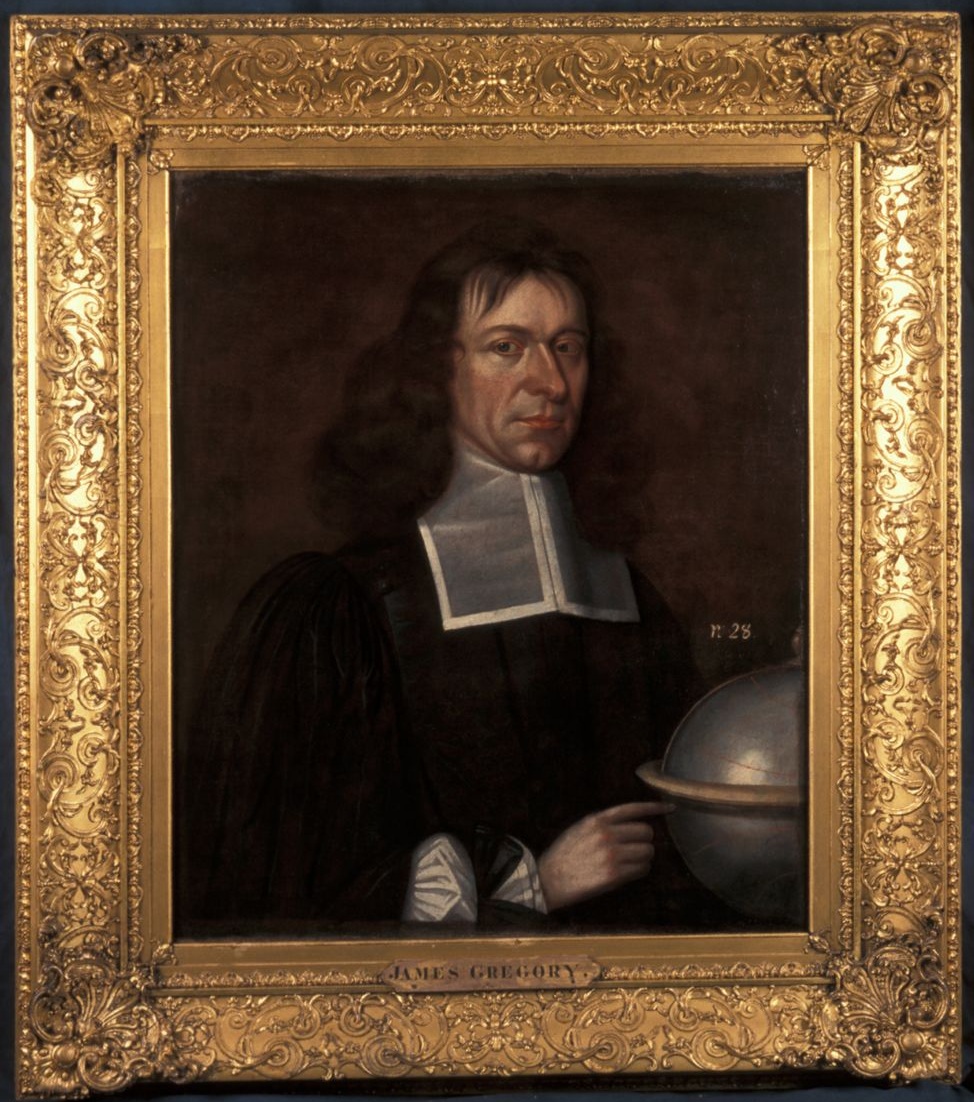
The image used on this website is a painting by an artist from the circle of the Scottish portrait painter David Scougal (d. 1685), held by the University Collections of the University of Aberdeen, and licensed under CC BY 4.0. The painting depicts James Gregory (1638-1675), a Scottish astronomer and mathematician, born in Aberdeenshire and educated in Marischal College, one of the constituent units of the University of Aberdeen. This workshop is held in his memory.
Privacy notice
This website itself does not use cookies, analytics, trackers, or collect any personal data. That is why you are not prompted to accept, customise, or reject cookies. It is a static site hosted via a GitHub organisation Dark Skies Exploration, owned by Jakub Zbrzeżny as a GitHub user in his capacity of a lecturer at the University of Aberdeen. No server-side processing or third-party scripts are used by this website.
Please note that GitHub may log technical data such as IP addresses and browser information for security and operational purposes. These data are not accessed, stored, or processed by Dark Skies Exploration or Jakub Zbrzeżny. For more information, see the GitHub Privacy Statement.
Personal data which are collected through the MS Form linked to this website ('register here') are processed in accordance with the University of Aberdeen Privacy Notice. This website and its host, GitHub, do not store or process form submissions. All such data collection is handled through secure university systems via institutional MS Forms.